
What Is AI?
Artificial Intelligence refers to the ability of machines to perform tasks that typically require human intelligence — such as learning, reasoning, problem-solving, and decision-making. It’s the science of making computers “think” and “act” intelligently.
💡 How AI Works
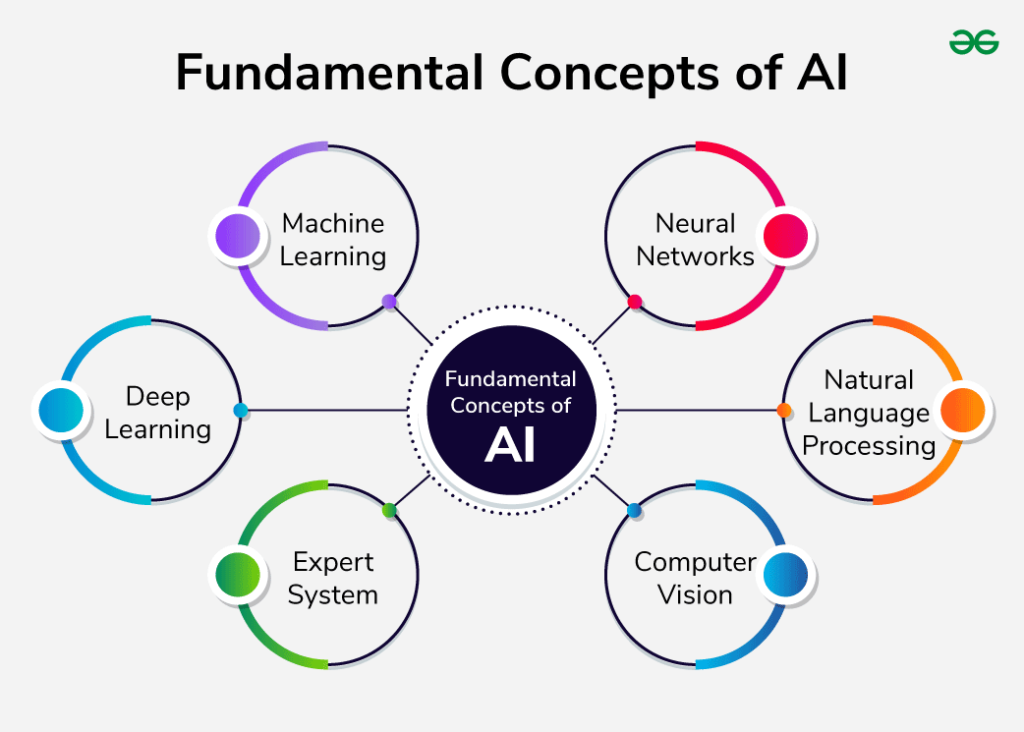
AI systems learn from data using algorithms that identify patterns and make predictions.
- Machine Learning allows computers to improve automatically through experience.
- Neural Networks mimic the human brain’s structure to process complex information.
- Natural Language Processing helps machines understand and respond to human language.
🚀 Applications of AI
AI is transforming industries worldwide:
- Healthcare → Diagnosing diseases and personalizing treatments.
- Education → Smart tutoring systems and adaptive learning platforms.
- Retail → Personalized recommendations and inventory management.
- Technology → Voice assistants, robotics, and cybersecurity.
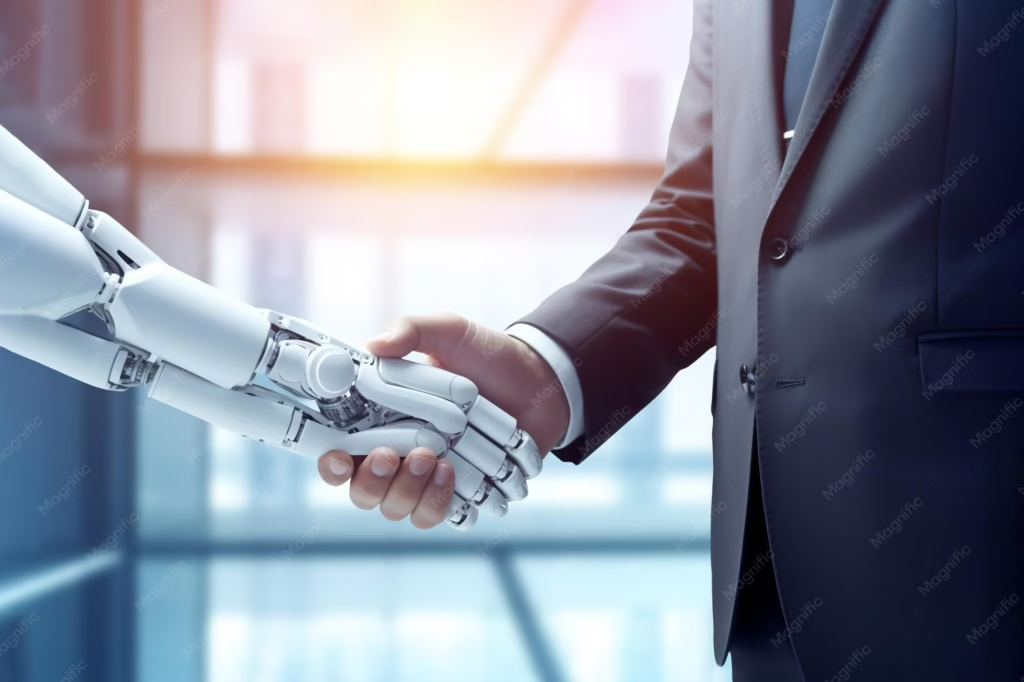
🔍 Why AI Matters
AI enhances efficiency, reduces human error, and opens new creative possibilities. It’s not just about automation — it’s about amplifying human potential. Businesses that embrace AI gain insights faster, make smarter decisions, and deliver better customer experiences.
⚖️ The Ethical Side
With great power comes responsibility. Ethical AI ensures fairness, transparency, and privacy. Developers and companies must design AI systems that respect human values and avoid bias.
🌟 The Future Ahead
AI will continue to evolve — from self-driving cars to intelligent design tools. The next frontier is Generative AI, which creates art, music, and even code, reshaping creativity itself.